Exploring the realm of tracking maintenance costs for company vehicles unveils a crucial aspect of managing a fleet efficiently. From understanding the importance of accurate cost tracking to delving into various methods and creating a robust tracking system, this guide serves as a valuable resource for businesses seeking to optimize their maintenance expenses.
Importance of Tracking Maintenance Costs
Tracking maintenance costs for company vehicles is crucial for efficient budgeting and decision-making. By keeping a record of expenses related to vehicle maintenance, companies can better manage their resources and ensure the smooth operation of their fleet.
Improved Financial Planning
- Accurate tracking of maintenance costs allows companies to create realistic budgets and allocate funds appropriately.
- By analyzing historical data, companies can identify trends and patterns in maintenance expenses, enabling them to make informed decisions about future investments in their vehicle fleet.
Enhanced Fleet Efficiency
- Regular maintenance tracking helps identify potential issues early on, preventing costly breakdowns and prolonging the lifespan of company vehicles.
- Timely maintenance can also improve fuel efficiency and overall performance, reducing operational costs in the long run.
Consequences of Ineffective Monitoring
- Failure to monitor maintenance costs effectively can lead to unexpected expenses and budget overruns, putting a strain on company finances.
- Ignoring maintenance tracking can result in higher repair costs due to neglected issues that could have been addressed earlier.
Methods for Tracking Maintenance Costs
Tracking maintenance costs for company vehicles is essential for effective budgeting and ensuring the longevity of the fleet. There are various methods that companies can use to track these costs, each with its own advantages and disadvantages.
Manual Tracking
Manual tracking involves recording maintenance expenses using pen and paper or spreadsheets. While this method may seem traditional, it can still be effective for smaller fleets or companies with simpler maintenance needs.
- Advantages:
- Low cost – minimal investment required for tools or software.
- Customizable – can tailor tracking sheets to specific needs.
- Disadvantages:
- Time-consuming – manual entry and calculations can be labor-intensive.
- Prone to errors – human error can lead to inaccuracies in data.
Software-Based Solutions
Software-based solutions utilize specialized programs or applications to automate the tracking process. These tools offer more advanced features and functionality compared to manual methods.
- Advantages:
- Efficiency – automated data entry and calculations save time.
- Accuracy – reduces the risk of human error in tracking.
- Disadvantages:
- Cost – initial investment may be required for software purchase and training.
- Complexity – learning curve for using new software and adapting to changes.
Creating a Maintenance Cost Tracking System
Setting up a maintenance cost tracking system is crucial for efficiently managing company vehicles. Here is a step-by-step guide to help you establish a reliable tracking system.
Designing the Tracking System
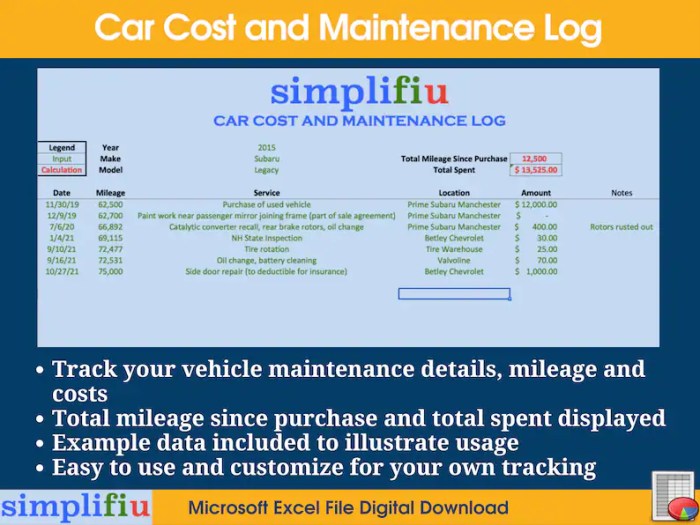
To begin, create a centralized database or spreadsheet to record all maintenance costs. Ensure it is easily accessible and regularly updated by designated personnel.
- Include essential data points such as vehicle identification number (VIN), date of maintenance, type of service, parts replaced, labor costs, and total expenses.
- Organize the data in a clear and structured format for easy reference and analysis.
- Implement a coding system or categories to categorize different types of maintenance costs (e.g., routine maintenance, repairs, inspections).
Ensuring Accuracy and Reliability
Maintaining accuracy and reliability in the tracking process is vital for making informed decisions. Here are some tips to ensure the effectiveness of your maintenance cost tracking system.
- Assign dedicated staff members responsible for entering and verifying data to minimize errors.
- Regularly reconcile the recorded maintenance costs with invoices and receipts to identify discrepancies.
- Implement regular audits to cross-check the data and ensure completeness and accuracy.
- Utilize software or tools that provide automated tracking and reporting features to streamline the process and reduce manual errors.
Analyzing Maintenance Cost Data
When it comes to analyzing maintenance cost data for company vehicles, businesses can gain valuable insights that can help them make more informed decisions and identify cost-saving opportunities. By examining the data closely, companies can pinpoint areas where maintenance costs are highest, trends that may be emerging, and potential ways to optimize their maintenance processes.
Significance of Trend Analysis
One key aspect of analyzing maintenance cost data is trend analysis. By looking at historical maintenance cost data over time, companies can identify patterns and trends that can help them predict future maintenance needs and costs. Trend analysis can also highlight areas where costs are increasing rapidly or unexpectedly, allowing businesses to take proactive measures to address these issues before they escalate.
- By conducting trend analysis, companies can anticipate when certain parts or components of their vehicles are more likely to fail, enabling them to replace them before a breakdown occurs, thus reducing downtime and costly repairs.
- Moreover, trend analysis can also reveal the impact of external factors such as weather conditions, driving habits, or route choices on maintenance costs, helping companies make adjustments to minimize these costs.
Examples of Data Analysis for Informed Decision-Making
Analyzing maintenance cost data can lead to more informed decision-making in various ways. Here are some examples:
- Identifying cost-saving opportunities: By analyzing maintenance cost data, companies can identify areas where costs can be reduced, such as by implementing preventive maintenance schedules, negotiating better deals with suppliers, or investing in more durable parts.
- Optimizing fleet management: Through data analysis, companies can optimize their fleet management practices by identifying underperforming vehicles, tracking maintenance patterns, and reallocating resources to minimize costs and maximize efficiency.
- Improving budget forecasting: By analyzing maintenance cost data, companies can more accurately forecast their maintenance budgets, allowing them to allocate resources effectively and avoid unexpected expenses that can impact their bottom line.
Final Conclusion
In conclusion, mastering the art of tracking maintenance costs for company vehicles is not just about numbers; it’s about ensuring operational efficiency and making informed decisions. By implementing the strategies discussed in this guide, companies can pave the way for cost-saving opportunities and enhanced decision-making processes.
Questions and Answers
How often should maintenance costs be tracked?
It is recommended to track maintenance costs on a regular basis, ideally monthly or quarterly, to ensure timely insights and decision-making.
What are the common pitfalls to avoid when tracking maintenance costs?
Common pitfalls include overlooking small expenses, failing to categorize costs properly, and not reconciling data regularly.
Is it necessary to track maintenance costs for leased company vehicles?
Yes, tracking maintenance costs for leased vehicles is essential to ensure compliance with lease agreements and maintain the vehicles’ optimal condition.